Art Shaped by Land: A Natural Convergence
My work lives at the meeting point of presence, land, and the unseen — where Goddess, plant life, and human hand are no longer separate.
I grew up on Coast Salish lands, surrounded by water, forest, and vast open sky. Long before I had language for art theory or Indigenous aesthetics, my body was already listening — to rhythm, to silence, to what lives in the spaces between things.
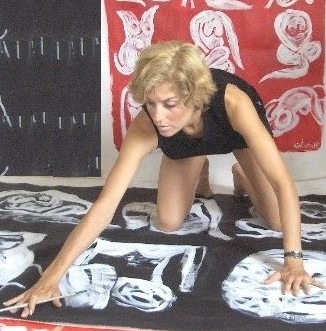
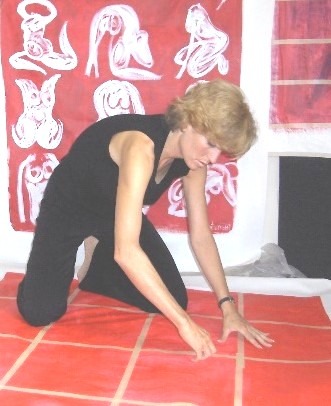
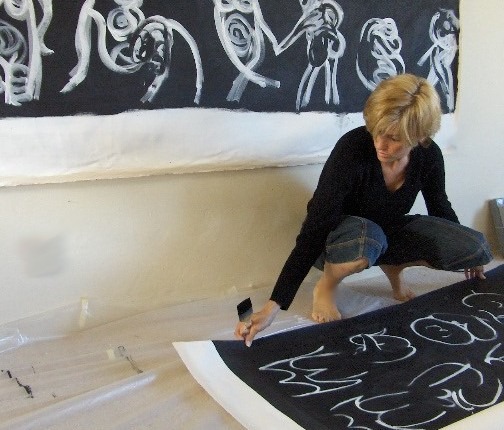
My paintings of the Divine Goddess emerged naturally and intuitively, without conscious reference to any particular artistic tradition. I did not set out to echo Coast Salish art. Instead, the forms arose from within me — through gesture, absence, and a deep trust in negative space as presence rather than emptiness.
Only later did I come to recognize that the visual and philosophical foundations of my work are shared resonances with indigenous ideologies.
Negative Space as Living Presence
In my practice, the Goddess is often revealed not through detailed depiction, but through what is left open. The figure is shaped by surrounding space — held, defined, and activated by it. This way of seeing came instinctively, through years of living in relationship with land and body rather than through study or imitation.
Over time, I noticed that Coast Salish art similarly honours the relationship between form and space, where meaning is not imposed but emerges through balance, restraint, and attentiveness. In both, space is not empty — it is alive, relational, and meaningful.
This recognition helped me understand why the paintings feel the way they do.
The Land as a Common Teacher
I believe land teaches all who live on it — not in identical ways, and not equally, but persistently. Growing up on Coast Salish territories shaped my senses, my nervous system, and my creative instincts. The tides, the silence, the density of cedar forests, and the cyclical nature of life here all informed how my art moves toward simplicity, reverence, and embodied knowing. The parallels I later saw between my work and Coast Salish artistic principles feel less like shared listening — different cultures, different lineages, responding in their own ways to the same living place.
Respectful Acknowledgement
I acknowledge that I was raised on the ancestral and unceded lands of the Coast Salish peoples, whose presence, governance, and relationship to this territory long predate my own. Growing up here, long before I had any understanding of Indigenous art, history, or philosophy, my body was already in conversation with the land. The tides, the cedar forests, the long stretches of rain and quiet shaped my nervous system, my sense of rhythm, and my way of perceiving presence. These elements taught me patience, listening, and attunement—not as concepts, but as lived experience.
I offer this acknowledgement with respect and humility, recognizing that my creative and spiritual life has been formed on land that carries deep memory, resilience, and ongoing stewardship. I understand that this relationship is not symbolic, but living, and that the cultures of the Coast Salish peoples continue here today. I hold gratitude for the land itself and for those who have cared for it across generations, and I remain committed to approaching my work with awareness, responsibility, and reverence for the place that has shaped me.
When the Goddess Moves Land, Lineage, and Living Relationship
When I paint, I am not illustrating an idea or crafting an image.
I am following something already in motion. The Goddess arrives through negative space, through absence that is full, through a softness that carries immense power. This way of working mirrors how I experience life itself — as something we are inside of, not in control of. I trust that when I get out of the way, what wants to come through does.
The Indigenous presence on this island are a people to be with, learn from, and respect. The resonance I feel is held with humility and gratitude, and any learning comes through lived connection, permission, and listening. My work is shaped by the understanding that art, land, and spirit are inseparable, and that the Indigenous peoples have always known this.
Plants as Living Collaborators
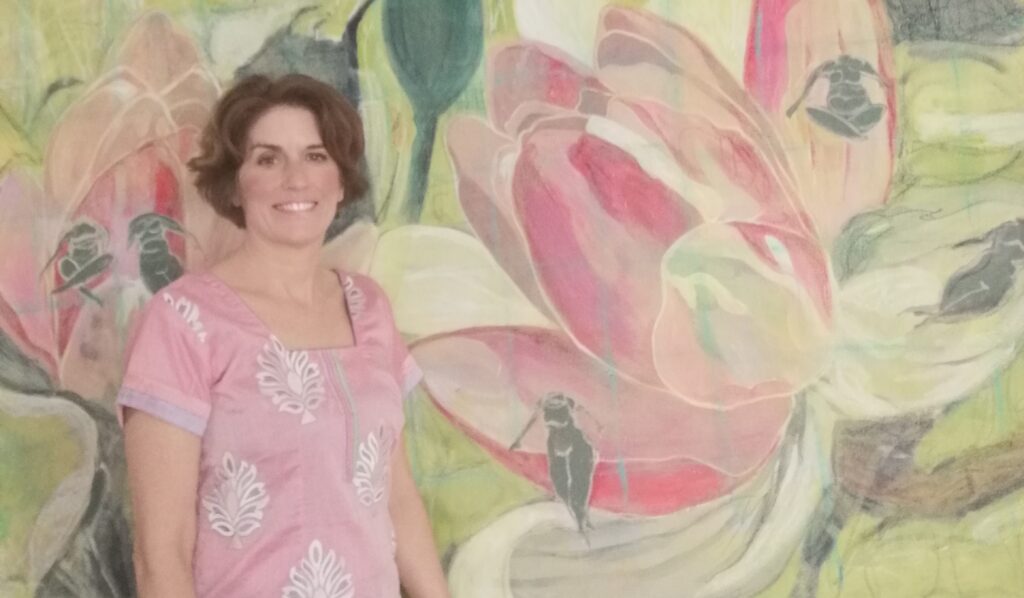
Plants are present in my paintings not as symbols, but as living collaborators. I work with plant forms, essences, and materials because they carry memory, intelligence, and rhythm that cannot be separated from land. When I paint, I am in relationship not only with the Goddess, but with the vegetal world — with growth, decay, medicine, and the quiet strength of roots and stems. Plants guide the movement of the work. They slow me down. They remind me that creation happens through cycles, not force.
This way of working did not come from theory. It came from listening — from being with plants long enough to feel their presence move through my body and into the work. In this sense, the paintings are not solely human expressions; they are relational acts, shaped by land, breath, and living beings.
The Lotus
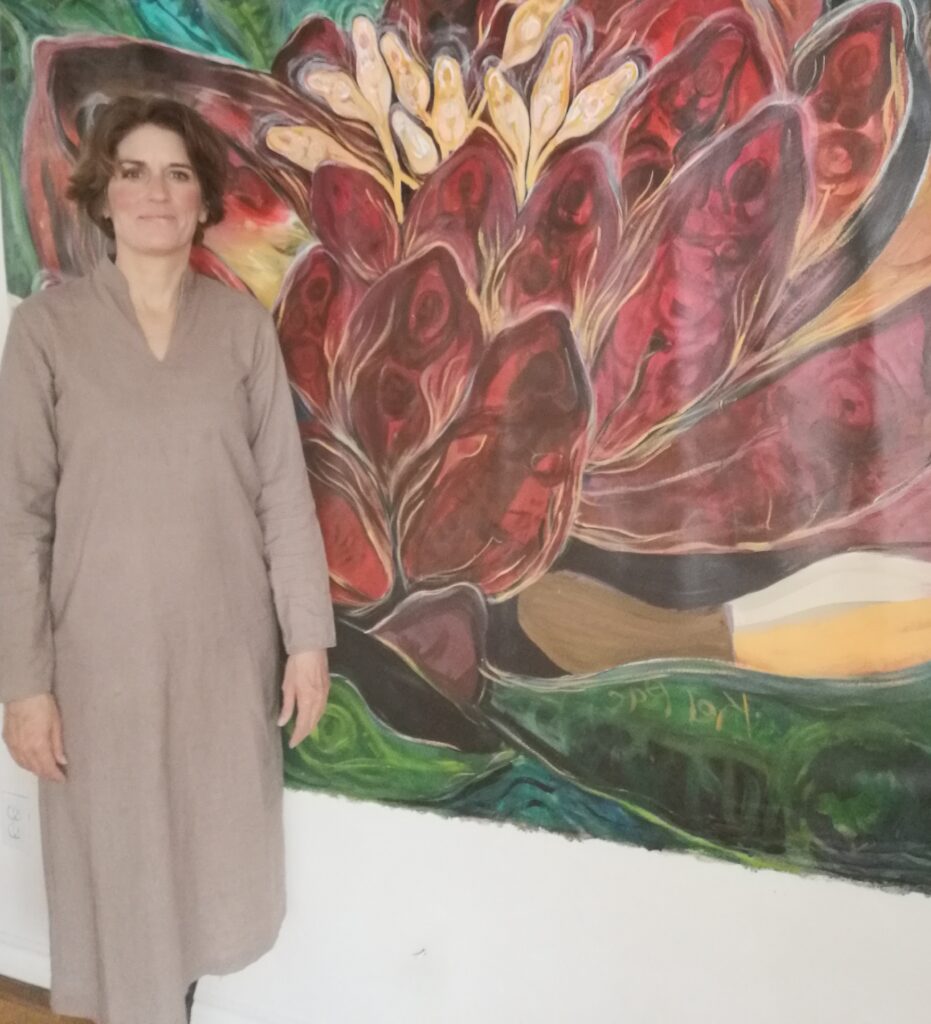
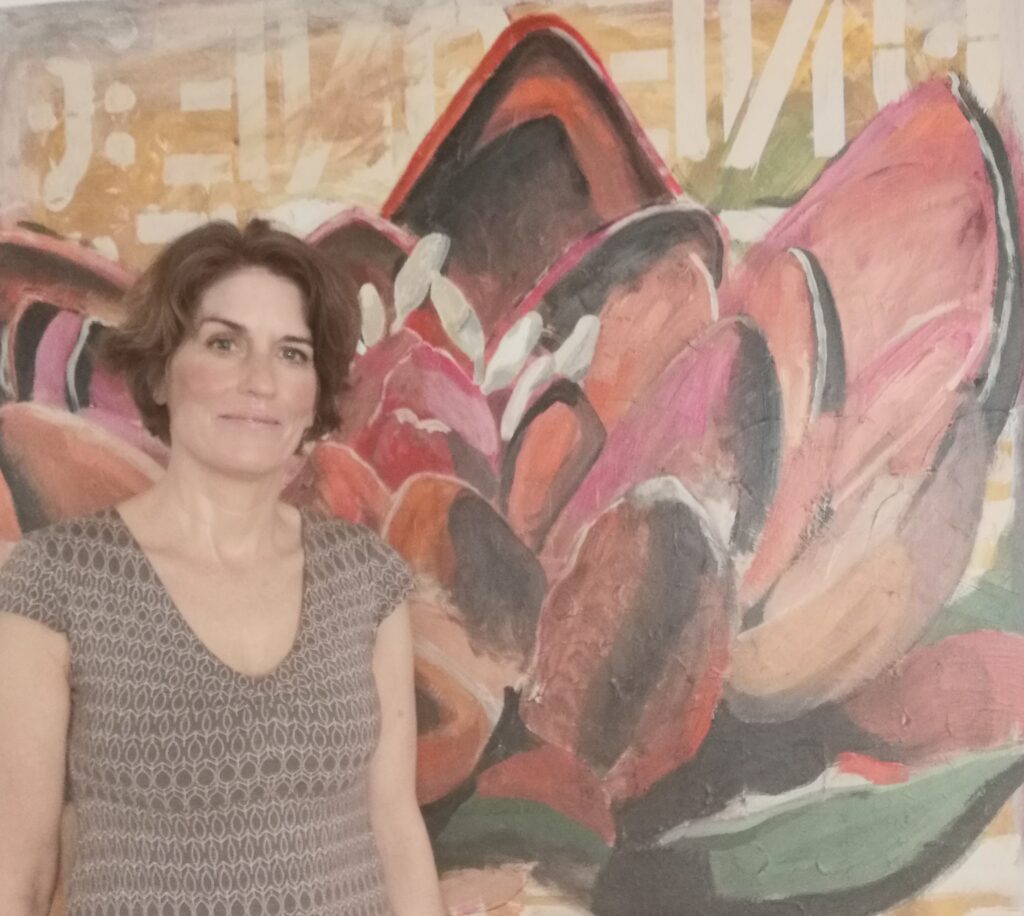
I tend to paint lotuses because they are born from mud, water, and light—the same elements that shape the human body. The lotus grows with its roots in dense earth, its stem rising through water, and its petals opening to the sun, mirroring the way our own inner systems move when we are balanced in our feminine nature. Its layered, circular form reflects the body’s inner orbits—breath expanding and releasing, blood circulating, emotions moving and settling—finding order through rhythm rather than force. The lotus remains clean despite its surroundings, shedding what cannot cling to it, a natural expression of inner harmony and spiritual cleansing that happens through presence, not effort. I use raw, primal colors—mineral reds, deep blues, bone whites, fertile greens—because they come from the same sources as flesh, soil, ash, and water. These colors carry the oldest memory of the Divine Mother: archaic, embodied, and enduring, a strength that is felt in the body long before it is understood by the mind.