Full Circle: A 40-Year Journey with the Divine Feminine

My work is the culmination of forty years of immersive travel, study, and reflection, exploring sacred sites, landscapes, and ancestral traditions around the world. For the past 25 years, I have been actively painting and writing about the Divine Mother, translating these insights into visual and literary expression. While much of my early exploration was contemplative, it laid the foundation for a sustained artistic practice that now informs every project I create—from exhibitions and workshops to creative works that engage audiences in meaningful, spiritual, and cultural ways.
Childhood: Yearning for the Maternal
I grew up in Cobble Hill on Vancouver Island, Coast Salish Territory (now Cowichan). My well-intentioned parents were feminist, and dolls and traditional expressions of mothering were not allowed. This created a profound yearning to connect with the maternal principle, a force I instinctively knew was part of who I was.
Being denied the experience of nurturing and being nurtured left me feeling disconnected from my true self. I began seeking this maternal energy elsewhere — in nature, myth, Indigenous teachings, and art. This early longing became the driving force behind my creative work, inspiring a lifelong exploration of the Divine Mother and how she manifests across cultures.
Early Encounters:
Coast Salish Territory and Indigenous Art
From a young age, I felt a deep connection to nature and the feminine power present in Indigenous teachings. The Coast Salish peoples honour the earth as a living, sacred mother. Their stories celebrate creation, birth, and renewal, teaching respect, balance, and relational harmony.
BC Indigenous art reflects these values in land, water, animals, plants, and symbols of birth, cycles, and renewal. Women are recognized as life-givers and knowledge holders. Growing up among these teachings, I absorbed the understanding that the feminine is immanent, relational, and life-giving, even when unseen.
Youth: Seeking the Stars and Their Knowledge
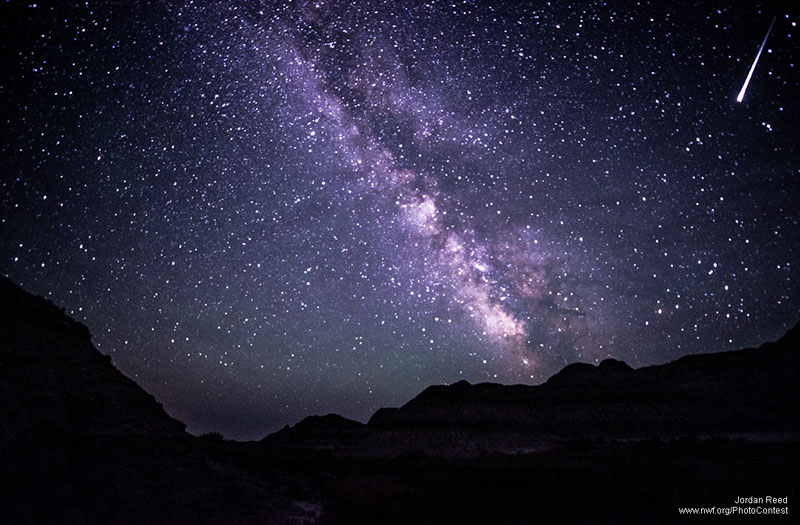
At age eleven, I was drawn to the idea of studying theology, and by twelve, my curiosity had moved towards the stars and their archetypes (the ecliptic—aka: the zodiac) captivated by their patterns of life and the rhythms of the cosmos. I found myself asking them the big questions: Where does life come from? Why live only to die? I never imagined then that these answers would be found in the Divine Feminine, who lies at the core of creation. She quietly guided me over decades of travel, study, and artistic exploration revealing herself in cycles, symbols, and the very fabric of life, eventually helping me understand the deepest questions I had been carrying within me the entire time.
Canada & Indigenous Encounters (1985–1990)
1985 – Northwest Territories
At seventeen, I left home for the Northwest Territories, a journey that reshaped how I understood art, place, and spirit. There, I encountered the artistry of the Dene, whose carvings and paintings carried a profound reverence for the land, animals, and life itself. Their work honored the Divine Feminine—not as an abstract idea, but as a living, relational presence woven into community, ancestry, and the natural world. Observing these sacred forms showed me that creativity can be ceremonial, a bridge between the human and the divine. This understanding left a lasting imprint on my own work, guiding my paintings and writings of the Divine Mother, where I explore cycles of care, protection, and ancestral wisdom through symbolic imagery drawn from nature and spirit.

1986 – The Canadian Provinces
Traveling through Canadian provinces—British Columbia, Alberta, Saskatchewan, Manitoba, Ontario, Quebec, New Brunswick, Newfoundland, Labrador, and Nova Scotia—I witnessed how Indigenous peoples express the Divine Mother through relationships, processes, and function. The Earth is seen as female, sentient, and relational; water is linked to women, birth, emotion, and the continuity of life; creation is ongoing, not a single event. Unlike Western hierarchies, the feminine is not “above” or “below,” but is felt in what holds everything together—a concept I would eventually experience deeply in my own practice. These insights have profoundly shaped my paintings and writing of the Divine Mother, guiding the ways I represent cycles of care, relationality, and ecological and spiritual interconnectedness in my work, and informing the themes of my exhibitions and community engagement projects.
1989 – Victoria, BC: A Coast Salish Potlatch
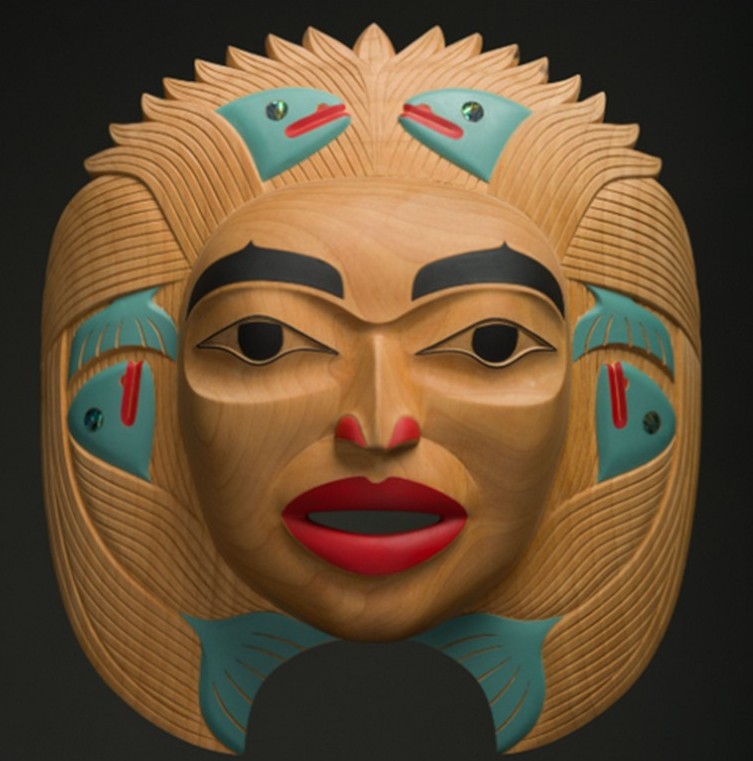
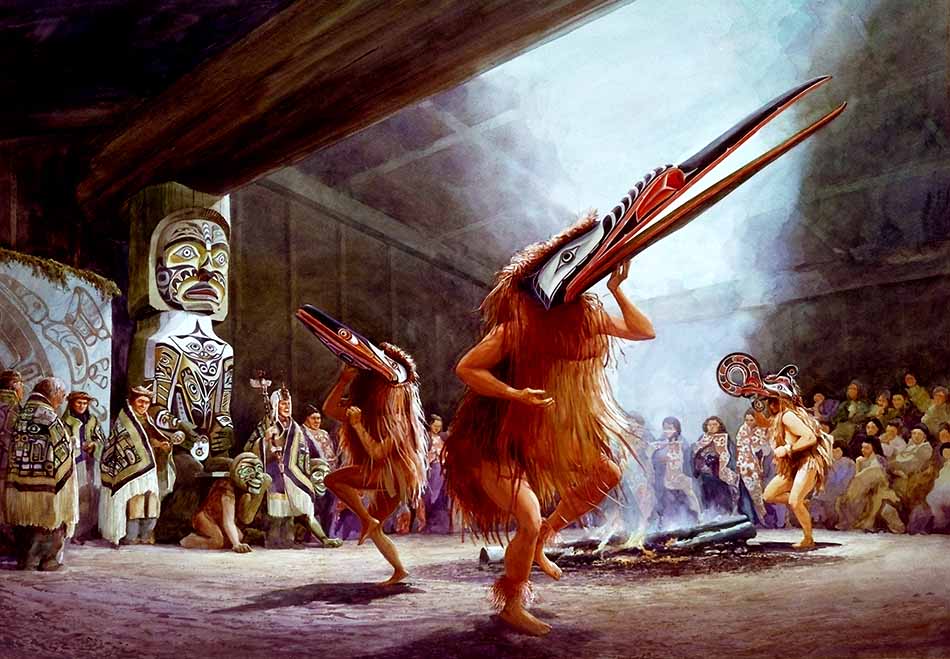
Invited by Tony Hunt, an Indigenous artist and carver, as a guest of honor to a potlatch at the longhouse in Victoria’s Inner Harbour, I witnessed law, lineage, and responsibility expressed through ceremony. Food, dance, and drumming were not entertainment, but deeply relational, intentional, and grounded in community and tradition. All dancers were male, wearing Salal skirts and headdresses—a plant symbolizing strength, endurance, healing, and connection to ancestral land. I recognized Salal as embodying grounded feminine energy, reflecting the life-giving and protective presence of the Divine Mother. This experience profoundly influenced my paintings and writings, inspiring me to explore how ceremonial practice, ancestral knowledge, and relationality can be expressed visually and narratively, and shaping the way I engage audiences through exhibitions and workshops.
Global Exploration: The Divine Mother Across Cultures (1990–2022)
1990 Nevada, Louisiana, Mississippi, and New Orleans
In 1990, traveling through Nevada, Louisiana, Mississippi, and New Orleans, I witnessed the Divine Feminine manifest across starkly different yet deeply connected landscapes. In Nevada’s vast deserts, she appeared austere and luminous, teaching endurance, solitude, and revelation beneath the unforgiving sun. Along the Mississippi River and its delta, she became fluid and fecund, moving through Louisiana’s swamps and bayous as a force of birth, decay, and transformation—muddy, rhythmic, and alive with memory. In Mississippi, she lingered in the slow bend of rivers and red earth, holding ancestral grief and quiet resilience. In New Orleans, she was both visible and veiled: a syncretic mother of water and crossroads, present in voodoo queens, jazz funerals, and salt-stained streets, where celebration and mourning coexist. Experiencing these landscapes deepened my understanding of the Divine Mother as place-bound, nurturing yet severe, and intimately connected to life cycles. These insights directly inform my paintings and writings, guiding the imagery, symbolism, and themes I explore in exhibitions, creative projects, and workshops that engage audiences with the living presence of the Divine Feminine.
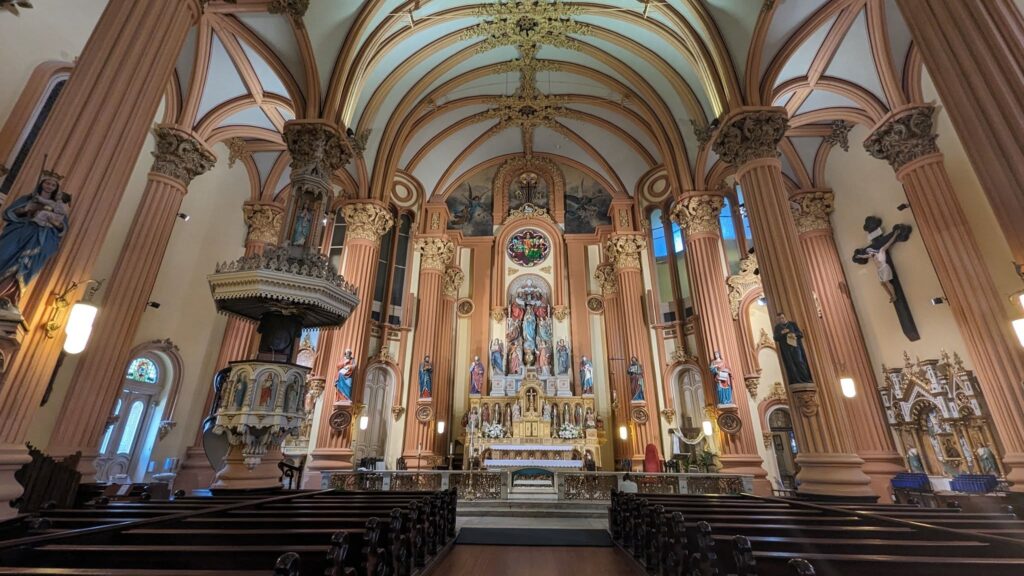
St. Mary’s Assumption Church in New Orleans
1993 Colorado, California and Hawaii
At 25, I left Canada for the United States—traveling through Colorado, California, and Hawaii—immersing myself in myth, psychology, and archetypal study. I began with Joseph Campbell’s The Hero with a Thousand Faces and The Power of Myth interviews with Bill Moyers, then moved into the work of Carl Jung. Campbell describes the Divine Mother as the Great Mother archetype: simultaneously nurturing and terrifying, immanent in earth, water, and fertility, and the primal source of life, death, and transformation. Jung’s perspective frames the Divine Mother psychologically, as a universal archetype of the collective unconscious—nurturing, protective, yet potentially destructive, embodying the life-giving and transformative forces of nature, instinct, and the psyche. These studies profoundly shaped my artistic vision, informing the themes, symbolism, and psychological depth of my paintings and writings of the Divine Mother, and guiding the ways I structure exhibitions, workshops, and creative engagements.
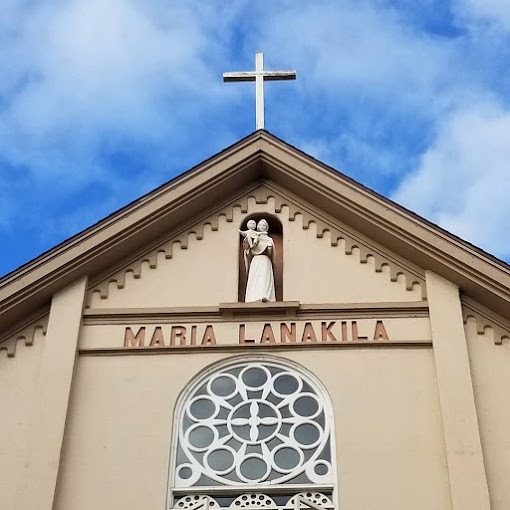
Maria Lanakila Church dedicated to the Divine Mother in Lahaina, Hawai
1995 Netherlands, Germany, Austria and Denmark
In 1995, traveling through the Netherlands, Germany, Austria, and Denmark, I witnessed the Divine Mother manifest as life-giving, protective, and deeply relational, woven into cycles of fertility, weather, rivers, crops, and maternal care. In the Netherlands, she appeared through water management and reclamation—a mother who protects through balance and vigilance, holding back floods while sustaining life. In Germany, she endured in forests and folk memory, a guardian of soil, hearth, and seasonal order, both nurturing and severe. Austria’s Great Mother was rooted in mountains and valleys, presiding over continuity, ancestry, and the rhythms of rural life. In Denmark, she appeared in wind, sea, and field—practical, resilient, and communal—binding people to land through care and responsibility. Experiencing these landscapes revealed the many faces of the Divine Feminine and deepened my understanding of her presence in land, community, and ritual. These insights directly inform my paintings and writings, shaping the imagery, symbolism, and relational themes I explore in exhibitions, creative projects, and workshops that invite audiences to connect with the life-giving and protective forces of the Divine Mother.
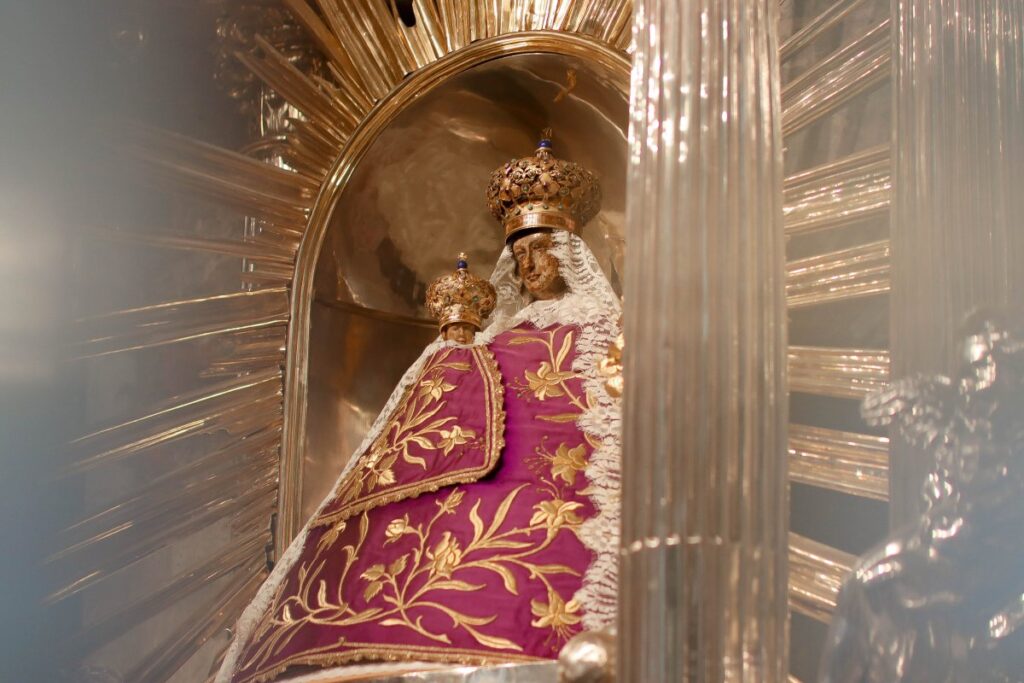
The Divine Mother in Austria
1996 South Africa
In South Africa, she is life-giving, protective, and profoundly place-bound, emerging through land, animals, and ancestral presence. She lives in red earth and open savannahs, in rivers that sustain villages and in mountains that hold memory. Intimately tied to community survival and ecological balance, she governs cycles of rain, harvest, and healing, carrying both nourishment and discipline. As an ancestral mother, she binds the living to those who came before, ensuring continuity through ritual, storytelling, and care for the land. Here, the Divine Feminine is not distant or symbolic—she is relational, embodied, and essential to the survival of both people and place.

San rock art in south Africa depicting ecological balance and continuity
1997 Malaysia, Thailand, Singapore, Sarawak, Borneo and Indonesia
In 1997, traveling through Malaysia, Thailand, Singapore, Sarawak, Borneo, and Indonesia, I observed the Divine Mother as a life-giving, protective, and place-bound force—deeply connected to land, water, fertility, and ancestry. In Sarawak, she was embodied in the longhouse, forest, rivers, and female elders, nurturing abundance while enforcing respect for ancestors, land, and community. These experiences revealed how the Divine Feminine sustains survival, communal continuity, and ecological balance, deepening my understanding of relationality, care, and responsibility. Upon returning to California, I began painting, using art as a way to explore and translate these insights into visual form. Becoming a mother this year added a special dimension to my journey, as I personally experienced the Divine Mother through the embodiment of care, protection, and transformation, which now informs the themes, imagery, and intention of my paintings and writings.
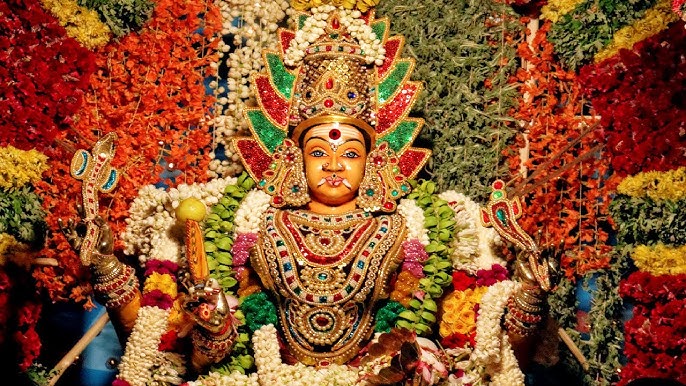
Sri Mahamariamman Temple, Kuala Lumpur (Malaysia)
1998 - 1999 US States
Between 1998 and 1999, traveling across the United States—including New Jersey, New York, Arizona, New Mexico, Texas, Louisiana, Mississippi, Alabama, Florida, South Carolina, North Carolina, Virginia, West Virginia, Oregon, Washington, Georgia, and Tennessee—I witnessed diverse Indigenous art forms, often expressed as spirals representing life, seasons, and birth. These images portrayed the Earth as a protector, provider, and life-giver—a mother figure sustaining harmony between people, animals, and land. Observing these expressions of the Divine Mother deepened my understanding of relationality, care, and ecological interconnectedness. These insights now inform my paintings and writings, guiding the symbolism, patterns, and thematic explorations in my work, and shaping the ways I engage audiences through exhibitions, creative projects, and workshops.
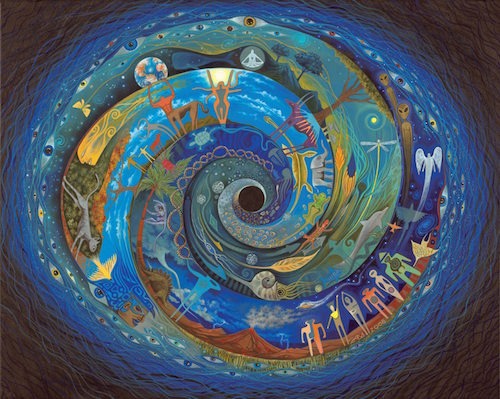
native artist unknown
1999 Belgium, Switzerland, France, Portugal and West Morocco
Across Belgium, Switzerland, Spain, western Morocco, France, and Portugal, the Divine Mother emerges as a protective, nurturing, and fertile presence shaped by crossroads of faith, land, and history. In Spain and Portugal, she is deeply Marian—sorrowful yet radiant—appearing in processions, shrines, and pilgrimage routes that bind devotion to soil and season. In France and Belgium, she lives in cathedrals, Black Madonnas, and female saints, merging Christian reverence with older earth and fertility traditions rooted in forests and fields. Switzerland reflects her as a guardian of mountains and valleys, steady and sustaining, holding communities together through continuity and care. In western Morocco, she persists beneath Islamic forms as a baraka-bearing maternal force, present in sacred springs, shrines, and the generative power of land and water. Across these regions, the Divine Mother embodies life-giving and sometimes severe power—place-bound, relational, and intimately tied to land, community, and cyclical time.
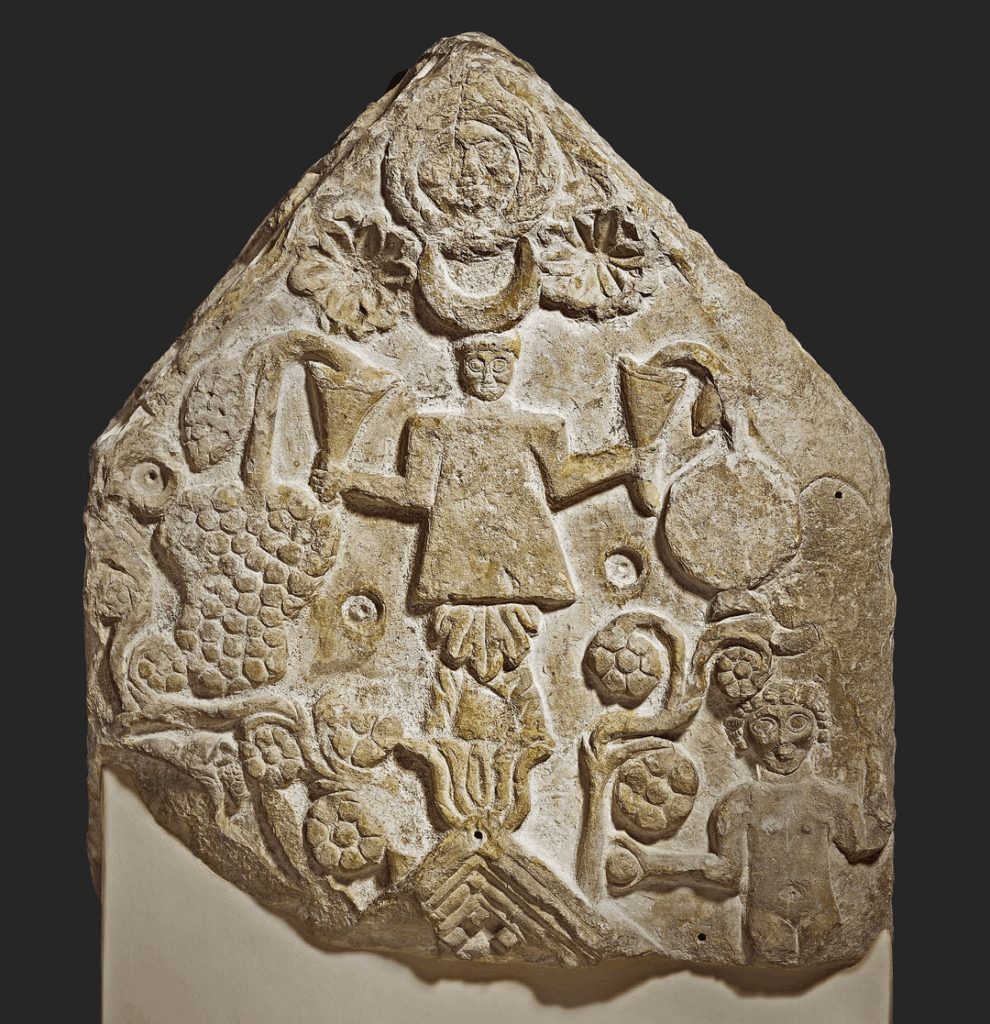
Limestone stela depicting the goddess Tanit
2000 Victoria BC, Canada
Southern Vancouver Island, Coast Salish territory (Songhees, Esquimalt, Lekwungen peoples), holds me in a way that feels both ancient and immediate. In Victoria, BC, the Divine Mother reveals herself as a life-giving, protective, and immanent force in land, water, and ancestors—nurturing yet demanding, intimately connected to the cycles of nature, community survival, and ceremonial practice. After living a fairly solitary life, and then navigating the challenges of being a single mother, I found myself drawn to contemplate divinity and to explore the deeper meaning of what it means to be a mother. Returning here feels like coming home—not just to a place, but to a sense of guidance, grounding, and reflection. Every walk along the shore, every gaze over the harbor, every encounter with the cedar, the moss, the mountains, seems to awaken something familiar and enduring. The land, the water, and the memory of the people who have long tended these territories remind me that care, resilience, and sacred responsibility are inseparable from life itself. Here, the Divine Mother is not distant; she is present, alive, and calling me to honor connection, continuity, and reverence in my own life.
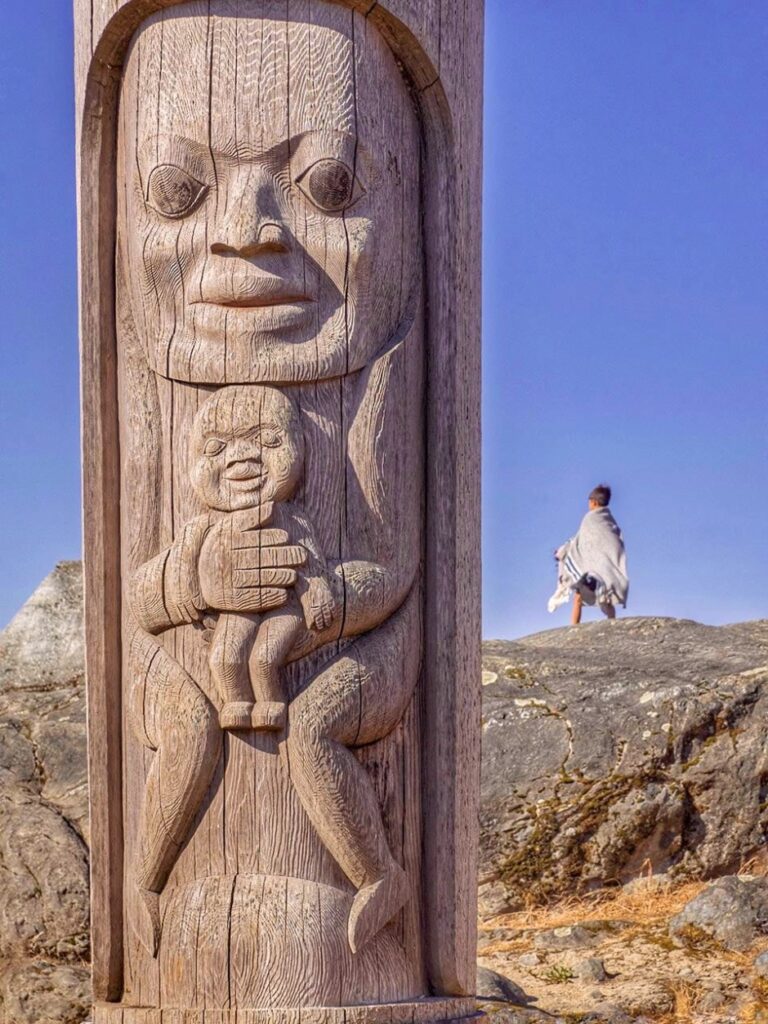
1900’s Indigenous artist unknown
2004 San Diego and Orange County, California
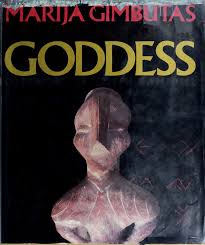
In Southern California, near the Mexican border, I observed the Divine Mother as a life-giving, protective, and immanent force within land, water, and ancestral memory—nurturing yet demanding, guiding seasonal and social cycles, ceremonial life, and community survival. During this time, while attending the Losina Fine Arts Academy, I encountered the work of Marija Gimbutas, whose research on prehistoric Europe profoundly shaped my understanding of the Divine Mother. Gimbutas describes her as the central Great Goddess: fertility-focused, life-giving, nature-imbued, and central to matrifocal communities, expressed through figurines, symbols, and ritual. These ideas profoundly influenced my paintings and writings, inspiring me to explore the archetypal and symbolic dimensions of the Divine Mother, integrating fertility, protection, cycles of life and death, and ancestral presence into my creative work and community-based projects.
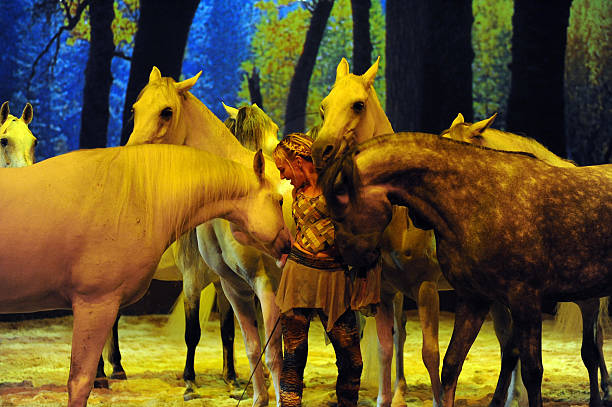
2006 Cavalia in Del Mar, CA - An Experience
I attended Cavalia, a live performance with acrobatics, and horsemanship that celebrates the relationship between humans and nature (horses) emphasizing harmony, trust, and the beauty of nature. It evoked awe and renewed my connection with life. Cavalia embodies characteristics of the Divine Mother archetype — nurturing, relational, life-affirming, and immanent in nature — through the celebration of horses, human-animal harmony, and inspiring natural spectacle, though it is symbolic and artistic rather than explicitly spiritual or ritual.
2007 in Spain and Ireland
In Spain and Ireland, the Divine Mother manifests as a nurturing, protective, and life-giving force, shaped by deep layers of devotion and myth. In Spain, she appears most visibly through the Virgin Mary—Our Lady of Sorrows, of the Sea, of the Fields—holding grief and grace together, her presence tied to harvests, pilgrimage routes, and communal ritual. In Ireland, she endures through older goddesses and maternal spirits, woven into wells, rivers, and green hills, later absorbed into figures like Brigid, where care, healing, and moral authority converge. In both places, the Divine Mother is inseparable from land and water, balancing tenderness with discipline, and sustaining community through fertility, protection, and enduring spiritual authority.
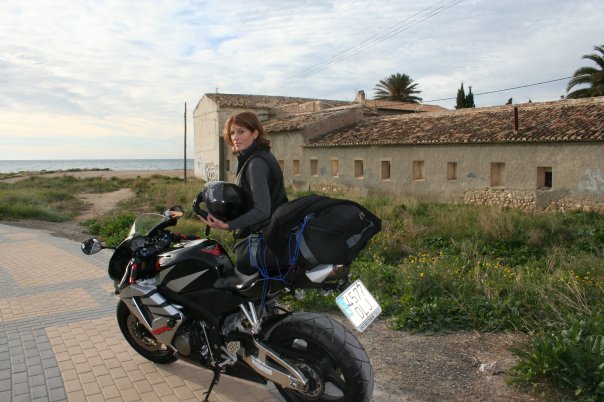
Traveling by motorbike, which I shipped to Spain.
2008 Vancouver, Canada
In Vancouver, situated on Coast Salish territory, the Divine Mother emerges through layered presences of land, water, and ancestral memory, shaped by both Indigenous cosmology and urban life. She lives in the meeting of mountains, forest, and sea, a life-giving and protective force that sustains salmon, rain, and cedar, while also demanding respect and reciprocity. The city’s density adds new cultural expressions, yet her immanence remains constant—felt in shoreline ceremonies, stewardship of waterways, and the quiet authority of ancestral teachings that endure beneath concrete and glass. Here, the Divine Mother guides community survival and ecological balance, nurturing yet uncompromising, reminding all who live there that the land and water remain alive and sovereign.
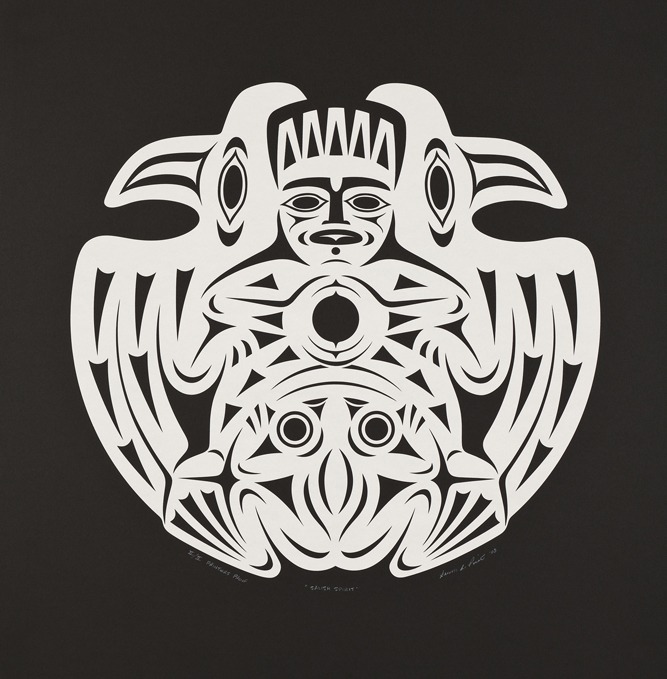
Right: Art of Frog Woman and Raven, at the Vancouver airport. Frog Woman and Raven is a the tale primarily explains the origin of salmon in the rivers and carries moral lessons about respect, generosity, and the consequences of mistreatment.
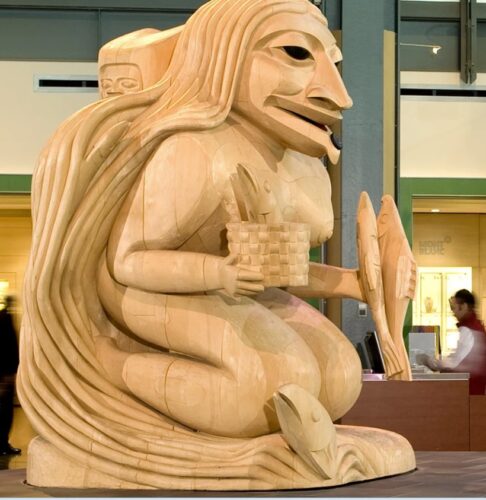
2009 Cabo San Lucas, Baja California, Mexico
In 2009, while in Cabo San Lucas, Mexico, I entered a prolonged period of deep meditation that culminated in an overwhelming state of samadhi—a direct and embodied experience of expanded consciousness. The intensity of this awakening was so complete that it felt as though my former identity was dissolving entirely; believing I might physically die, I entrusted my personal papers and affairs to a close friend in preparation. What followed was not death, but a profound rebirth—a radical reorientation of perception, selfhood, and creative awareness. This experience permanently altered my relationship to consciousness, form, and meaning, laying the energetic and symbolic groundwork for my later encounter with the Goddess after returning to Canada. The aftereffects of this rebirth continue to inform my artistic process, where creation becomes an act of remembrance, integration, and reverence for the mystery that moves through all things.
2010 Victoria BC, Canada
In 2010, after an extended period of extremely deep meditation, I returned to Victoria, British Columbia, on Coast Salish territory. My practice was slowing down on its level of intensity in which perception slowed dramatically and prana moved through my body with overwhelming force; as I gradually began to return toward ordinary alignment, the energetic pressure became so strong that I feared my jaw might crack under its flow. It was within this liminal state—between dissolution and embodiment—that I was challenged with my greatest fear. Then She brought me to her and revealed her greatness to me. This confirmed but reshaped my awareness. In that cosmic landscape, there was no sacred dialogue, just the anchoring of knowing. This moment marked the beginning of a conscious, relational path with the Goddess that continues to inform my artistic and spiritual work.
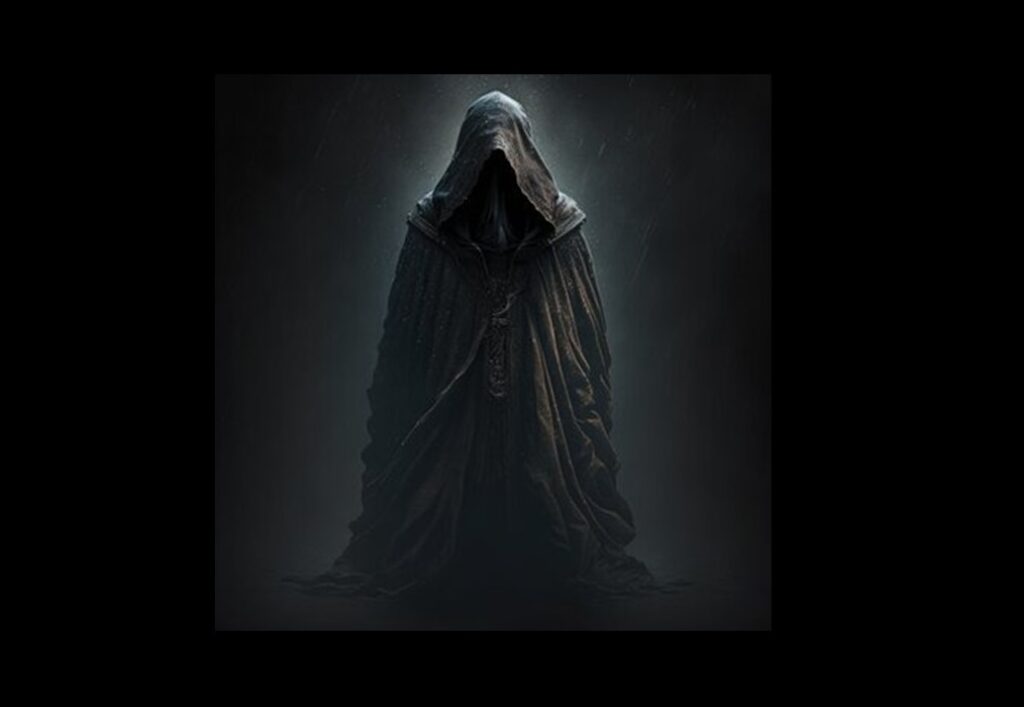
The Goddess reveals herself to me
2015 Cancun, and the Mexican Riviera
Northeastern tip of the Yucatán Peninsula, along the Caribbean coast. Indigenous Peoples: Primarily Maya communities historically and today. Spiritual Context: Maya cosmology (animistic, ancestral, and nature-based) blends with Catholicism, especially veneration of the Virgin Mary. Environment: Coastal, tropical forests, cenotes (sacred sinkholes), and reefs are central to life and spirituality
In Cancún and the Mexican Riviera, the Divine Mother manifests as a life-giving, protective, and place-bound force — embodied in land, cenotes, reefs, crops, and maternal ancestors — nurturing yet demanding, and intimately tied to survival, fertility, community continuity, and spiritual practice.
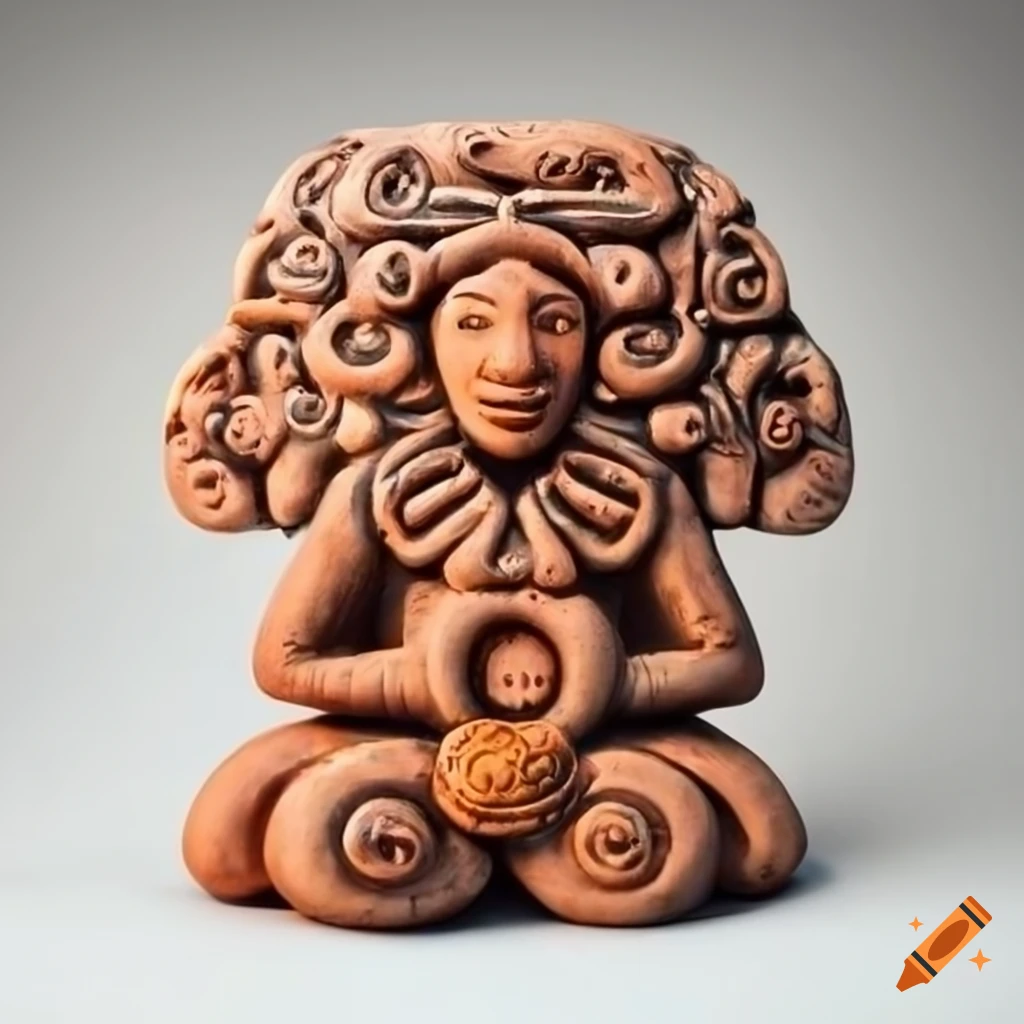
Mayan Divine Feminine as the Tree Of Life
2017 England, Wales, North Italy, and Luxembourg
Across England, Wales, Italy, and Luxembourg, the Divine Mother emerges through shared patterns of maternal protection and place-bound authority, shaping families, villages, and social order.
She governs fertility and life-giving power—present in agriculture, sacred wells, rivers, childbirth, and harvest cycles—ensuring continuity between generations. Deeply rooted in specific landscapes, she inhabits hills, valleys, mountains, and water sources, making land itself a vessel of care and memory.
Embodied as the Virgin Mary, female saints, ancestral matriarchs, or older pre-Christian goddesses, she carries a dual nature: nurturing and sustaining, yet firm in enforcing respect for natural and moral law. Across these regions, the Divine Mother is not abstract but relational—woven into daily life, communal responsibility, and the enduring bond between people and place.
Right: Basilica di Superga in Turin – Church dedicated to the Divine Mother

2019 South Italy, Rome to Tropea
In Calabria, the Divine Mother manifests as a nurturing, protective, and life-giving force — appearing as the Virgin Mary, pre-Christian fertility goddesses, ancestral women, and maternal spirits — intimately tied to the land, harvest, sacred natural sites, and community life, balancing compassion with moral and natural authority.
The story of this church in Castrovillari is that when Norman nobles planned to build a castle atop the town’s hill, workers uncovered a buried image of the Madonna and Child. Seen as a miraculous sign, the count abandoned the fortress and instead commissioned a church on the spot, creating the Santuario della Madonna del Castello. Over the centuries, it became the city’s spiritual heart, with the Madonna del Castello revered as protector and patroness, inspiring devotion, pilgrimage, and annual celebrations.
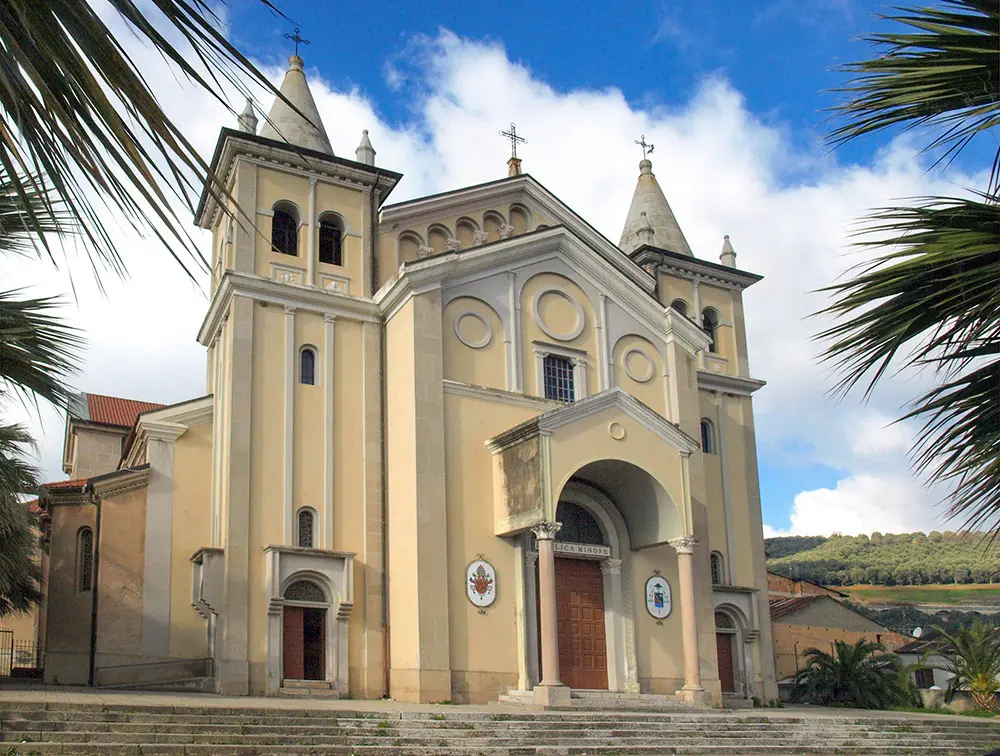
Santuario della Madonna del Castello
2022 A Return to Victoria, BC Canada
In Victoria, BC, I feel the presence of the Divine Mother all around me—in the land, the sea, and the sky. The mountains, ocean, and forests of Coast Salish territory carry ancestral memory, and being here makes me realize that the Goddess is alive in every rock, river, and cedar. Walking these shores or sitting among old-growth trees fills me with reverence and grounding, and reminds me of history, identity, and responsibility. The land itself seems to teach me care, balance, and continuity, offering both sanctuary and challenge, a living presence that nurtures, protects, and calls me to honor my connection to this place and its people.
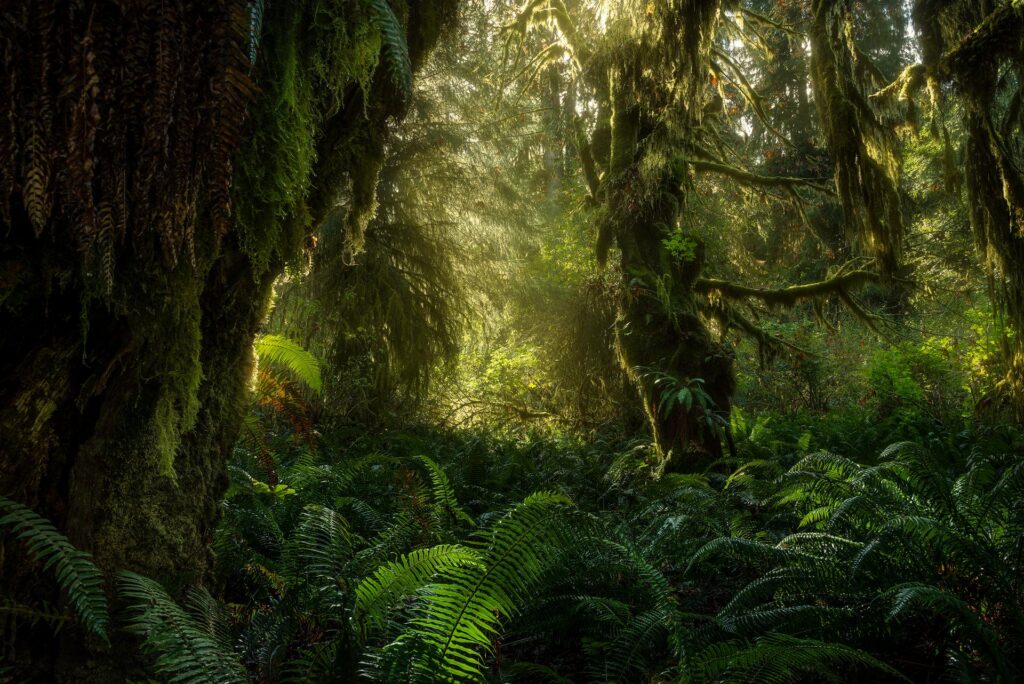
Vancouver Island Rainforest
A Living Journey
- The Divine Mother as Origin — life-giving, protective, and cyclical, present in land, water, and cosmos
- Places as Teacher — deserts, rivers, forests, sacred architecture, and ancestral lands shaping understanding
- Cycles & the Zodiac — celestial rhythms reflected in seasonal, bodily, and spiritual patterns
- Embodied Knowing — wisdom gained through presence, ceremony, motherhood, and inner inquiry
- Continuity Across Cultures — shared maternal archetypes expressed through diverse traditions and landscapes
Closing Thoughts on The Goddess
The Goddess is the force that sustains the hero, who’ has a thousand faces.’ She is present in every culture, landscape, and encounter I have experienced. She moves through rivers and mountains, deserts and forests, ceremonies and stories, holding the cycles of life, death, and renewal. At the heart of the journey is the Divine Mother, whose presence is constant, nurturing, and powerful. She is the thread connecting all creation (every starry path), the invisible guide behind every myth, every ritual, and personal transformation.
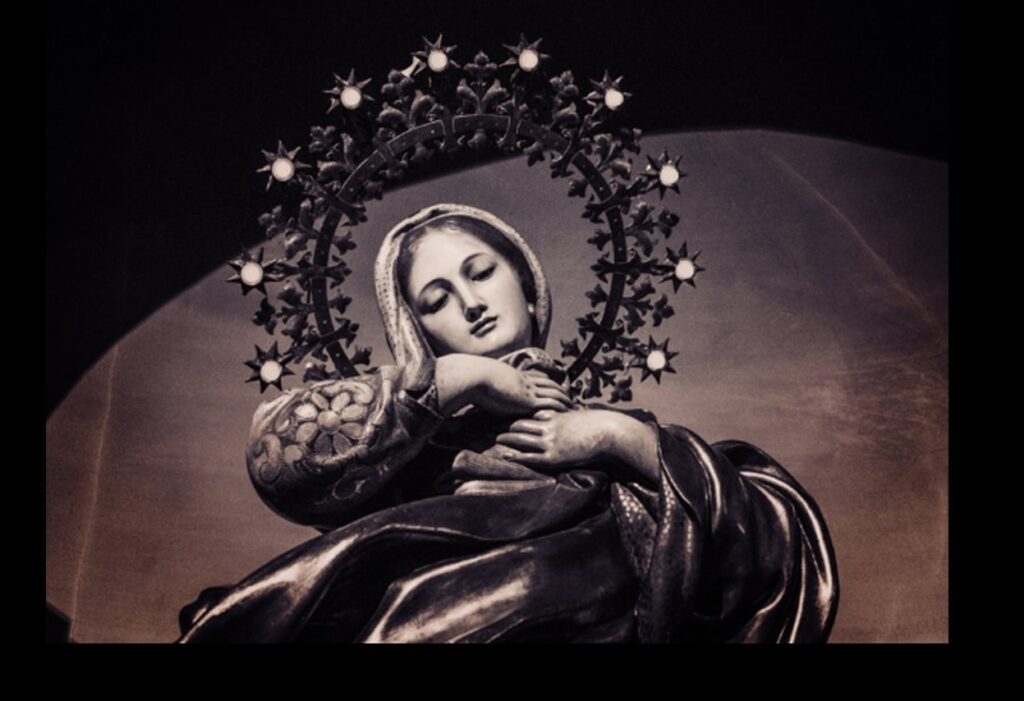
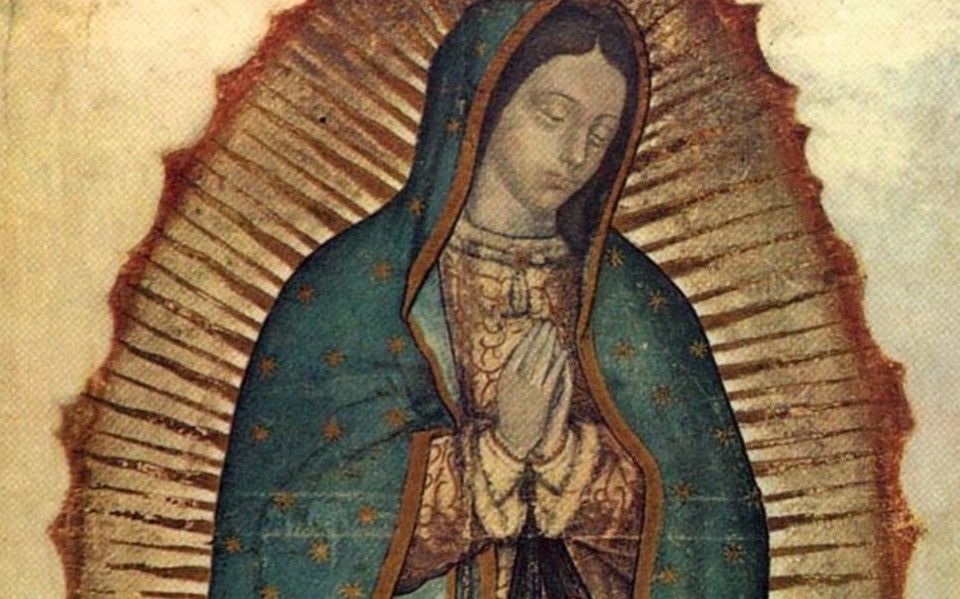
The Divine Mother with a halo of stars, which surround her force. In the view of earth, it is the ecliptic—the zodiac—symbolizing the universal patterns of life that my project seeks to explore.