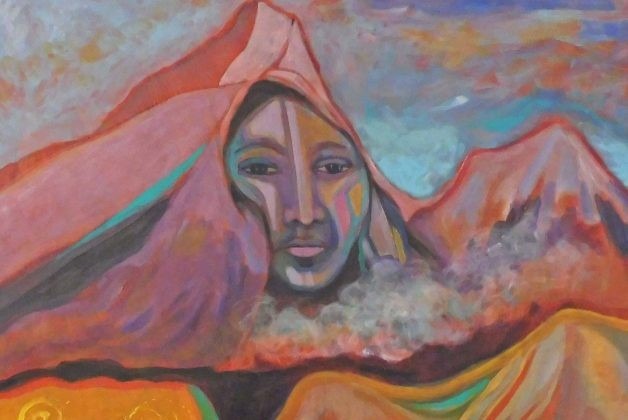
Many First Nations of the Northwest Coast (what is now British Columbia) recognized powerful female divine or semi-divine figures, but they did not frame them as “goddesses” in the Greco-Roman sense. Most Indigenous cultures of the region did not separate the sacred from the world, nor did they worship distant, perfect deities. Power was understood as immanent—present in land, animals, ancestors, and natural forces. Because of this worldview, instead of goddesses enthroned above humanity, the Divine Feminine appears as female creator beings, transformers, ancestral mothers, and supernatural women tied to place, food systems, and law. Across British Columbia, Indigenous nations emphasize reciprocity, transformation, and consequence. Power is not granted permanently; it is earned, lost, negotiated, and restored. What replaces “goddess worship” here are rituals embedded in everyday survival and social order: salmon-run ceremonies, songs owned by families, potlatches, and storytelling that functions as law and place-based memory. Female power often appears at thresholds—origins, lineage, food, birth, death, and survival. A key similarity to Sedna across Inuit and BC coastal cultures is that female figures are tied to food scarcity and abundance. Hunger follows human wrongdoing; repair comes through ritual, restraint, and confession. The natural world responds—it does not judge. This reflects a deep circumpolar logic. British Columbia nations clearly recognized female divine power—but they did not place it on a throne. Power walked. Power married. Power starved you if you forgot your place. Power fed you when you remembered. These figures are active forces, not objects of devotion. Among the Haida, for example, stories tell of female sea beings such as the Woman of the Tides or Foam Woman. These beings control tides, shellfish, and ocean abundance. Some are ancestral figures rather than gods; others are dangerous teachers. Like Sedna, they are not benevolent or evil but responsive to human behavior. The sea is often understood as female, yet it is not personified as a single ruling goddess. Coast Salish peoples—including Squamish, Halkomelem, and neighboring Nuu-chah-nulth cultures—tell stories of First Woman, Old Woman, and female counterparts to the Transformer. These women shape the land, teach food practices, establish social laws, and often become stone, islands, or mountains. They are creators through transformation, not command. Among the Nuu-chah-nulth of the west coast of Vancouver Island, female sea powers appear in stories of women associated with whales and ocean wealth, women who marry supernatural sea beings, and women who control hunting success. Again, female power is expressed as relationship to food and survival—not a goddess who rules, but a being who withholds or releases. Across these cultures, the Divine Feminine is not distant, perfect, or worshipped. She is embedded, relational, and consequential. She teaches through hunger and abundance, through land and water, through memory and transformation.